September 30, 2026



Discerning the Right Fit: What Makes a Mission-Aligned Catholic School Leader?
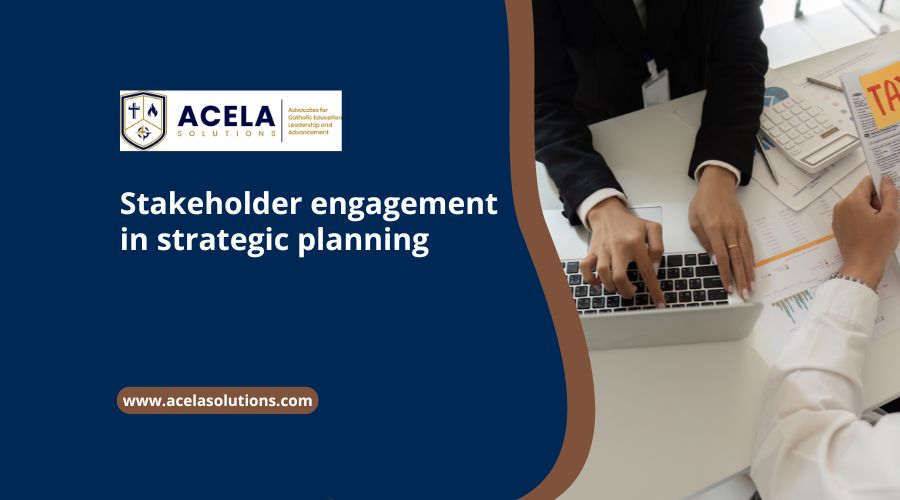
Institutional survival depends on keeping your mission, assets, and local trust in perfect harmony. Many leadership teams draft future roadmaps in complete isolation, only to face heavy pushback during the execution phase. True organizational growth relies on matching local expectations with operational realities, which makes stakeholder engagement in strategic planning a vital element of long-term viability.
This guide outlines the concrete steps required to design a shared planning process that respects your local context while securing clear progress. Leaders will learn how to identify key participants, organize feedback loops, and transition from high-level vision to daily operational reality.
Partnering with outside advisors helps leadership teams explore how we approach strategic planning to balance diverse viewpoints. By using stakeholder engagement in strategic planning from the start, you can build a durable roadmap that serves both current needs and future generations.
Why Broad Collaboration Shapes Long-Term Outcomes
Future plans rarely fail because they lack vision. Instead, they falter because the community does not feel ownership. Many leadership teams find that stakeholder engagement in strategic planning is not a single event, but an ongoing cooperative journey.
Without active involvement from faculty, donors, and board members, a plan remains a dusty document on a shelf. Genuine participation ensures that the future priorities reflect the actual capacity and needs of the community.
This shared approach builds a strong foundation of trust. When people see their own input reflected in the final plan, they become active advocates for its success.
Identifying Key Contributors and Their Roles
A successful planning process requires a carefully selected group of internal and external voices. Leaders must organize participants based on their relationship to the institution to guarantee balanced representation.
Internal contributors include faculty, staff, and administrators who manage daily operations. External parties encompass donors, alumni, board members, and regional partners who support the long-term mission.
The following list outlines the primary groups to include in your feedback sessions.
- Governing boards who hold fiduciary responsibility and guide long-term stewardship.
- Administrative leaders who execute daily operations and manage staff resources.
- Benefactors and donors who invest in the institution's future viability.
- Community partners and families who directly benefit from the services provided.
Each of these groups brings a distinct perspective to the table. Balancing these viewpoints prevents any single interest from dominating the overall direction.
Four Steps to Structuring the Shared Process
Building a clear framework ensures that feedback remains productive and focused on the future. Leaders should follow a clear sequence to get the highest value from every contribution.
The first phase involves setting clear boundaries for the conversation. Participants must understand what decisions are open for input and which parameters are fixed by governance or financial realities.
By focusing on stakeholder engagement in strategic planning through structured feedback loops, boards can identify hidden operational risks before they impact the budget.
The second phase focuses on gathering qualitative and quantitative data through surveys and listening sessions. This step separates evidence from interpretation and highlights areas of consensus.
The third phase requires organizing this feedback into clear future pillars. Leadership teams must rank these pillars based on available resources and institutional capacity.
The final phase is the formal rollout, where the community sees how their input shaped the final objectives. Clear communication during this phase reinforces institutional openness and trust.
Connecting Community Feedback with Resource Allocation
A plan without financial backing is simply a wish list. Every future priority must be directly linked to a specific funding source and operational timeline.
When leadership teams value stakeholder engagement in strategic planning, they build a shared sense of ownership that speeds up the execution phase.
This connection requires a realistic assessment of current assets and philanthropic potential. Leaders must resist the temptation to promise more than their operations can sustain.
Choosing a shared model requires more upfront time but drastically reduces the friction of execution. It ensures that resource allocation matches community expectations.
Measuring the Success of the Shared Process
Evaluating the effectiveness of your cooperative efforts is essential for maintaining momentum. Leaders should establish clear metrics to track participation and shared direction throughout the planning cycle.
An assessment of institutional readiness often reveals that deep stakeholder engagement in strategic planning prevents the friction commonly associated with major organizational shifts.
Key indicators of success include high response rates on community surveys and diverse attendance at listening sessions. A broad representation of voices indicates a healthy, active community.
Another vital metric is the speed of plan adoption. When the community feels heard, they adopt new policies and support new initiatives with minimal resistance.
Effective Strategies for Facilitating Productive Sessions
Fostering an environment of open dialogue requires intentional facilitation. Leaders must create spaces where participants feel comfortable sharing constructive feedback.
Using a neutral facilitator can help keep discussions objective and focused on long-term goals. This practice prevents personal grievances from overshadowing systemic solutions.
The following list provides useful tips for running successful listening sessions.
- Establish ground rules that prioritize respectful dialogue and active listening.
- Focus on future opportunities rather than past operational difficulties.
- Keep sessions structured with clear time limits for each topic of discussion.
- Document all feedback openly and share summaries with the participants.
These practices keep the conversation constructive and in harmony with the institution's long-term mission. They transform potential conflict into cooperative progress.
Integrating Feedback into Governance and Operations
The final future plan must serve as the primary guide for board governance and daily management decisions. It should not exist as a separate initiative.
Boards should link their meeting agendas and committee structures with the pillars identified during the planning process. Utilizing structured board retreats and workshops can speed up this connection.
The following checklist helps transition a finished plan into daily operational routines.
- Assign clear ownership for each major initiative to specific staff members.
- Establish a monthly progress register to track milestones and resource usage.
- Directly link annual budget allocations with the approved priorities.
- Provide regular progress updates to the board and the broader community.
This structured approach guarantees that the plan remains a living document. It keeps the entire organization accountable to the commitments made during the planning phase.
Partnering for Clear Direction
Navigating the complexities of community dynamics requires a balanced, experienced approach. Effective stakeholder engagement in strategic planning ensures that every decision-maker, faculty member, and benefactor remains in harmony with the core mission.
The team at ACELA Solutions brings deep operational expertise to this work. Across their careers, our practitioners have secured more than 575 leaders, raised over $2 billion in philanthropic support for institutions served, and supported more than 6,000 Catholic schools, dioceses, religious communities, and ministries. This depth of real-world experience ensures that every planning process is grounded in practical execution.
If it would help to talk through your current situation, our team would be glad to listen. Please start a conversation with ACELA to explore how we can support your institution's journey toward operational vitality.
Frequently Asked Questions
How does stakeholder engagement in strategic planning prevent community division.
Involving a wide range of voices early in the process removes the mystery from decision-making and reduces suspicion. When people understand the financial and operational realities facing the institution, they are far more likely to support hard choices. This shared understanding transforms potential critics into active partners in stewardship.
What is the primary difference between a strategic plan and an organizational or operational assessment.
A strategic plan sets the long-term direction of an institution by defining goals, resources, timelines, and measures of progress. An organizational or operational assessment evaluates how well current systems, roles, and processes support the daily mission. While planning looks forward, assessment analyzes current efficiency to build a stronger foundation.
How often should an institution update its strategic plan.
Most institutions benefit from a major planning cycle every three to five years, depending on external stability. The plan should still be reviewed annually to adjust for unexpected economic or enrollment shifts. This annual review ensures that the document remains relevant to daily operations.
What is the role of the board in the strategic planning process.
The board holds ultimate responsibility for approving the plan and ensuring it aligns with the institutional mission. During the planning process, trustees provide essential oversight, assist in gathering feedback, and secure the philanthropic resources needed for execution. They do not manage daily execution, which remains the responsibility of the administrative team.
How can we ensure high participation rates among busy stakeholders.
Providing multiple channels for feedback is the most effective way to encourage participation. Offering online surveys alongside hybrid, in-person, and virtual listening sessions accommodates different schedules. Clearly communicating how the feedback will be used also motivates busy individuals to contribute.
 Share This Post