October 01, 2026



Discerning the Right Fit: What Makes a Mission-Aligned Catholic School Leader?
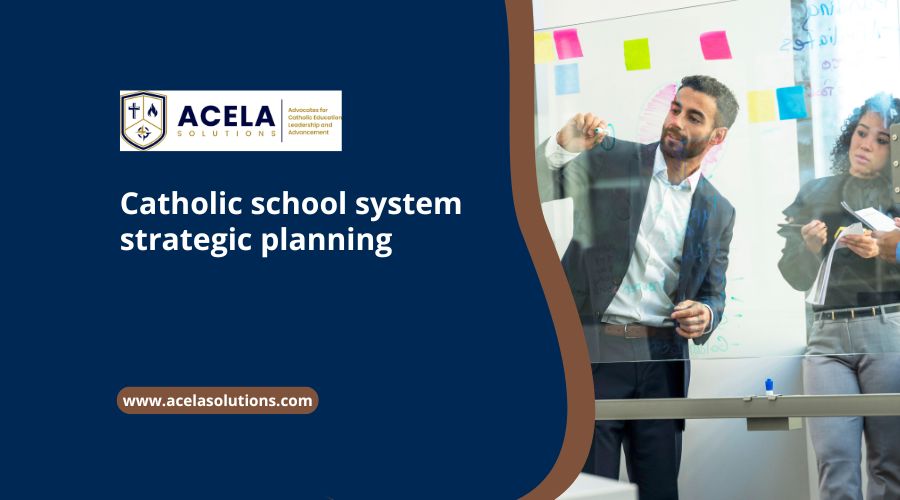
Maintaining a network of educational institutions requires a deliberate shift from reactive management to forward-looking leadership. Catholic school system strategic planning provides the precise operational roadmap necessary to bring multiple parishes, schools, and central offices under a single, cohesive mission. Leaders face the complex task of balancing local community identities with system-wide operational efficiencies.
Securing this balance ensures that schools remain viable, accessible, and academically excellent for future generations of students.
Individual schools often struggle when operating in isolation, leading to duplicated resources and fragmented branding. A coordinated approach to school system strategy and design resolves these inefficiencies by establishing clear lines of authority and shared operational support. This structure allows principals to focus on instructional leadership rather than building maintenance or payroll processing.
System-wide coordination also protects the overall financial health of the diocese or sponsoring network. Resources can be allocated dynamically to support struggling campuses while reinforcing high-performing ones. This collective strength builds a more resilient educational ecosystem capable of navigating shifting demographics and economic pressures.
Core Pillars of Catholic School System Strategic Planning
Successful system-wide planning relies on three pillars that bridge mission with daily operations. These pillars ensure that long-term goals translate into measurable progress across all campuses.
The first pillar centers on data-driven governance, which serves as the bedrock of Catholic school system strategic planning. Leaders must study enrollment trends, facility utilization rates, and local demographic shifts before drafting long-term goals. Relying on concrete numbers rather than assumptions prevents costly missteps in resource allocation.
The second pillar involves community participation. Input from pastors, principals, parents, and advisory boards must shape the vision to ensure broad ownership of the final plan. True participation involves active listening sessions and clear communication throughout the entire planning lifecycle.
The third pillar is operational vitality. This requires a thorough review of finance, advancement, and enrollment strategies to ensure long-term viability. Schools must have the financial runway to execute their academic missions without facing constant budgetary crises.
Designing a Shared Planning Framework
Designing a shared framework is another essential component of Catholic school system strategic planning. This structured process begins with comprehensive strategic planning and organizational assessments that establish a clear operational baseline.
A well-designed framework also accounts for the varying administrative capacities of different schools within the system. Some campuses may possess fully staffed advancement offices, while others rely on a single principal to manage all operations. The framework must establish realistic expectations and provide centralized resources to bridge these capacity gaps.
The planning framework should follow a clear, sequential path.
- Conducting a comprehensive operational assessment to evaluate current financial health and facility conditions across all campuses.
- Gathering qualitative feedback from school leaders, educators, and families to identify local strengths and challenges.
- Drafting core priorities centered on academic excellence, Catholic identity, financial stewardship, and enrollment growth.
- Establishing explicit key performance indicators and timelines for each core priority to ensure accountability.
- Directing central office resources to provide ongoing support for local school execution efforts.
This phased approach prevents the planning team from becoming overwhelmed by the scope of the project. It also provides natural check-in points to celebrate small wins and adjust tactics as new data emerges.
Navigating the Complexities of System Governance
Governance structures in multi-school systems often present unique friction points. Parish-sponsored schools, diocesan schools, and independent private schools may all operate under different legal and canonical frameworks. Catholic school system strategic planning must respect these distinctions while fostering deep operational coordination.
Clear decision rights prevent administrative gridlock and ensure smooth day-to-day operations. The planning process must explicitly define which decisions belong to local pastors and principals, and which decisions rest with the superintendent or system board.
Addressing these governance complexities early in the planning process prevents misunderstandings and fosters a culture of mutual respect. Clear documentation of decision-making authority ensures that all parties understand their specific roles in achieving the system's long-term goals. This clarity builds trust and strengthens the overall unity of the educational network.
The accompanying comparison table outlines a typical distribution of operational responsibilities within a modern, cooperative school system model, highlighting the balance between local control and centralized services.
| Operational Area | Local School Responsibility | Centralized System Responsibility |
|---|---|---|
| Instruction & Culture | Daily curriculum delivery, mission integration, and local school traditions. | Academic standards, professional development frameworks, and compliance. |
| Finance & Operations | Budget monitoring and local facility day-to-day maintenance. | Payroll processing, human resources, accounting, and purchasing power. |
| Marketing & Enrollment | On-campus tours, local community outreach, and family relationships. | Brand strategy, digital marketing campaigns, and enrollment management systems. |
| Advancement & Philanthropy | Annual fund execution and local donor cultivation. | Capital campaign planning, database management, and major gift strategy. |
Centralizing business functions like human resources, marketing, and accounting relieves local administrators of heavy operational burdens. This centralization ensures professional-grade compliance and efficiency across the entire network. Local leaders can then dedicate their energy to fostering vibrant school cultures and driving academic achievement.
System leadership must remain sensitive to the unique history and heritage of each individual school. Merging operational functions should never result in a generic, homogenized student experience. The most successful systems celebrate local traditions while leveraging collective purchasing power and shared expertise.
Key Steps for Successful Strategy Execution
A long-term plan is only as valuable as its execution. Many systems fail to put their plans into action because they treat the roadmap document as a final product rather than a living guide.
Without a disciplined execution strategy, even the most thorough Catholic school system strategic planning will fail to deliver lasting results. Executing a system-wide strategy requires a disciplined approach to change management.
- Appoint dedicated project managers to oversee each major key initiative and track progress metrics.
- Establish a monthly reporting cadence where school leaders share updates and address execution bottlenecks together.
- Allocate a specific key initiative fund to finance new projects rather than drawing from existing operational budgets.
- Publish regular, clear progress reports to the broader community to maintain trust and momentum.
Regular monitoring allows the system to remain agile in the face of unexpected external challenges. It ensures that the operational roadmap remains relevant even as economic or demographic conditions shift.
Measuring Long-Term Vitality and Success
Systems must define clear, measurable progress markers to evaluate the ultimate impact of their Catholic school system strategic planning efforts. These metrics should extend beyond simple enrollment numbers to capture the holistic health of the educational network.
Key indicators of long-term operational vitality include:
- Retention rates for both experienced educators and diverse student populations across all grade levels.
- The ratio of unrestricted operating reserves to annual operating expenses at both the school and system levels.
- Annual growth in philanthropic support, indicating strong community backing and trust in the system's vision.
- Consistency in academic achievement scores and mission integration benchmarks across diverse campuses.
Tracking these metrics over a three-to-five-year period reveals the true trajectory of the system. It allows leaders to make timely adjustments before minor operational slip-ups turn into systemic crises.
Partnering for Lasting Educational Leadership
Navigating the intricacies of Catholic school system strategic planning requires deep operational expertise and an objective perspective. External advisors who have walked these halls understand the delicate balance between mission and margin.
At ACELA Solutions, we partner with dioceses, central offices, and school networks to design practical, accessible, and affordable operational roadmaps. Our team of seasoned practitioners draws on decades of leadership experience to help your system build a stable future. We invite you to explore the school communities we serve to see how cooperative planning drives lasting vitality.
If you are ready to strengthen your system's operational design and secure its long-term viability, please start a conversation with our team today.
Frequently Asked Questions
What is the typical timeframe for a Catholic school system strategic planning cycle.
The Catholic school system strategic planning process generally spans six to nine months from initial community participation to final board approval. This timeline ensures sufficient opportunity for data collection, community listening sessions, and plan refinement.
What are the essential data points to gather before beginning the process.
Systems should compile five years of enrollment history, detailed facility maintenance records, and multi-year operating budgets. Local demographic forecasts and community survey results also provide essential context for future projections.
What is the role of local parish pastors in a centralized school system model.
Pastors remain vital spiritual leaders and key advisors within the cooperative system structure. While central offices manage daily business operations, pastors continue to foster parish-school relationships and guide pastoral ministries.
How can we ensure accountability and consistent execution of the final plan.
Establishing a centralized dashboard with specific quarterly targets keeps execution on track. Assigning clear initiative owners and conducting regular progress reviews prevents the strategic plan from becoming a static document.
How does system-wide planning support individual school identities.
The planning process emphasizes shared operational services while actively protecting local school cultures and histories. Centralizing business tasks gives local leaders more capacity to celebrate their unique campus traditions and heritage.
 Share This Post