October 02, 2026



Discerning the Right Fit: What Makes a Mission-Aligned Catholic School Leader?
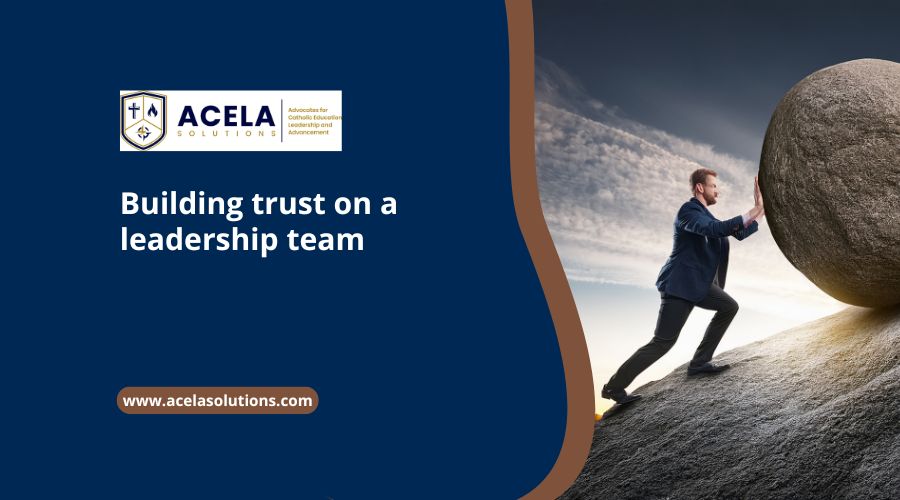
Navigating a major organizational turnaround or launching a new long-term roadmap requires deep structural coordination. Successful institutions understand that building trust on a leadership team remains the core driver of long-term operational endurance. This guide provides executive directors, school presidents, and board chairs with clear steps to move their executive groups past polite compliance into genuine shared work.
An executive group using modern communication tools and clear protocols moves swiftly toward its core objectives. True cohesion never develops overnight through social events or superficial team-building exercises. It requires clear behavioral commitments and structured processes that connect daily tasks with institutional values.
Why Trust Matters
Every executive decision ripples through an entire organization, affecting staff morale, community connection, and fiscal stability. Polite distance among cabinet members often masks deep-seated coordination issues. These issues eventually surface during pivotal transitions.
Without a foundation of mutual reliability, departments begin to operate as isolated silos. This internal division leads to duplicate efforts, misallocated resources, and a steady decline in institutional momentum.
When organizations focus first on building trust on a leadership team, they reduce friction and dissolve institutional barriers. This structural health allows schools and sponsored ministries to maintain their focus on mission and long-term viability.
- Unified execution: Decisions are put into action rapidly because all leaders are in agreement.
- Resource sharing: Silos dissolve, allowing for shared assets and reduced duplication of effort.
- Enhanced morale: Staff members thrive when they see a cohesive, trust-filled executive cabinet.
Organizations with cohesive leadership cabinets demonstrate higher rates of plan execution and better retention among key staff. Reviewing successful client testimonials confirms that coordination at the top always precedes success at the operational level.
The Anatomy of Dysfunction
Many executives struggle with building trust on a leadership team because they mistake polite agreement for genuine vulnerability. Artificial harmony prevents healthy debate. This leaves important structural decisions unexamined and poorly executed.
A lack of trust manifests as defensive communication, guarded resources, and a reluctance to seek help across departmental lines. These behaviors drain executive energy and slow down overall progress.
- Avoidance of constructive conflict during important group debates.
- Guarded departmental resources and information silos.
- Reluctance to admit mistakes or ask peers for operational help.
- Posturing and impression management instead of solving core institutional issues.
Addressing these challenges directly prevents minor friction from turning into widespread organizational failure. When team members fear vulnerability, they spend valuable time managing impressions rather than solving core problems. This defensive posture limits the cabinet's ability to respond to changing market conditions or enrollment challenges.
To build an effective executive environment, leaders must move beyond abstract concepts and adopt concrete behavioral frameworks. A structured approach ensures that every team member understands their role and behavioral expectations.
The foundation of any successful transition rests on clear communication channels and shared accountability. Leaders must establish regular review cycles to assess team dynamics and address structural bottlenecks.
We often observe that building trust on a leadership team requires consistent follow-through and open communication protocols. This openness ensures that long-term goals remain connected with day-to-day operations.
Establishing clear expectations prevents misunderstandings and reduces the administrative friction that often plagues growing institutions. Executive coaching and orderly reviews can speed up this process by providing objective feedback to the entire team.
Applied Steps to Build Executive Coordination
Establishing a high-performing cabinet requires structured interventions and intentional practice. The following list outlines specific actions that executive groups can start immediately to strengthen their shared foundation.
- Define clear decision-making rights to eliminate ambiguity and overlapping responsibilities.
- Establish a shared vocabulary around organizational health and leadership-team effectiveness.
- Schedule regular, non-operational planning sessions focused entirely on long-term institutional goals.
- Create feedback loops that allow team members to address interpersonal friction constructively.
These steps provide a clear roadmap for teams seeking to improve their internal dynamics. Consistent application of these practices builds a resilient culture capable of navigating complex transitions.
Organizations should document these agreements in a team covenant that outlines communication standards and conflict resolution steps. Having a written reference point ensures accountability during high-stress periods.
Addressing Trust Across Institutional Structures
The dynamics of executive work vary significantly depending on the governance model of the organization. In Catholic school offices or diocesan structures, leaders must navigate complex relationships between central offices and local sites.
Sponsors and boards must work in tandem with executive directors to ensure that governance policies support team cohesion. Clear roles prevent the executive cabinet from becoming bogged down in governance disputes.
Applying these principles across diverse educational and social ministry settings requires a deep understanding of local context. Leaders must adapt their approach to respect historical traditions while driving necessary operational improvements.
The most effective leaders balance local autonomy with centralized support systems to maximize institutional capacity. This balance requires constant communication and a shared commitment to the broader organizational vision.
Applied Exercises for Executive Teams
Applied exercises designed for building trust on a leadership team must focus on structural clarity and behavioral commitments. These exercises help teams uncover hidden assumptions and establish a baseline for future coordination.
One effective method involves conducting structured organizational assessments to identify departmental friction points. This objective data allows the team to address real operational challenges without personal bias.
- Conduct a role-clarity matrix exercise to map out key responsibilities and handoffs.
- Engage in regular case-study reviews to practice collective decision-making under low-stakes conditions.
- Use professional coaching to support individual growth and team coordination.
Running these exercises on a quarterly basis keeps the team focused on continuous improvement. This discipline ensures that the organization remains agile and responsive to external challenges.
Investing in regular leadership and culture development provides the tools needed to navigate complex leadership transitions smoothly. These interventions build the baseline trust required to handle difficult fiscal or operational decisions.
The Impact of High-Trust Leadership on Organizational Vitality
A cohesive executive team serves as a model for the entire organization, establishing a standard of openness and mutual support. This cultural unity directly impacts recruitment, retention, and overall operational efficiency.
Staff members thrive in environments where they observe consistent, unified leadership from the executive suite. This stability fosters a culture of innovation and shared responsibility.
Ultimately, the strength of an organization depends on the quality of its leadership relationships. Investing in team development secures the operational vitality needed to serve future generations.
We see that high-trust organizations spend less time managing internal crises and more time advancing their core mission. This efficiency creates a positive feedback loop that attracts top-tier talent and philanthropic support.
Sustaining Leadership Cohesion
At ACELA Solutions, we understand that building trust on a leadership team is not a single event but a continuous commitment. Our team of experienced practitioners has walked these halls and sat in these chairs, bringing real-world insights to your organization. We offer customized guidance to help Catholic schools, dioceses, and social ministries strengthen their leadership-team effectiveness.
We provide comprehensive support through targeted assessments to identify growth areas. If it would help to talk through your situation, our team would be glad to listen. Start a conversation with ACELA to explore how we can support your leadership journey.
Frequently Asked Questions
What are the key indicators of trust on an executive team.
A high-trust executive team displays open communication, healthy debate, and shared accountability for all outcomes. Members do not hesitate to admit mistakes or request help from their peers. This openness fosters a supportive environment that speeds up execution and strengthens institutional alignment.
What is the timeline required for building trust on a leadership team.
Developing a cohesive executive group typically requires six to twelve months of intentional effort and structured practice. Our approach to building trust on a leadership team focuses on usable frameworks and behavioral coordination. Sustaining this dynamic requires ongoing attention and periodic team retreats.
What is the role of organizational assessments in building team cohesion.
Conducting organizational assessments helps identify structural bottlenecks and communication gaps that hinder cooperation. This process provides objective data that allows teams to address friction points constructively. The resulting insights guide the development of targeted leadership coaching and training plans.
What are the best strategies for managing conflict within a leadership cabinet.
Effective conflict management relies on established communication protocols and clear decision-making rights. Teams must address disagreements directly during structured meetings rather than allowing issues to linger. Professional facilitation during board retreats and workshops can help establish these healthy communication patterns.
 Share This Post